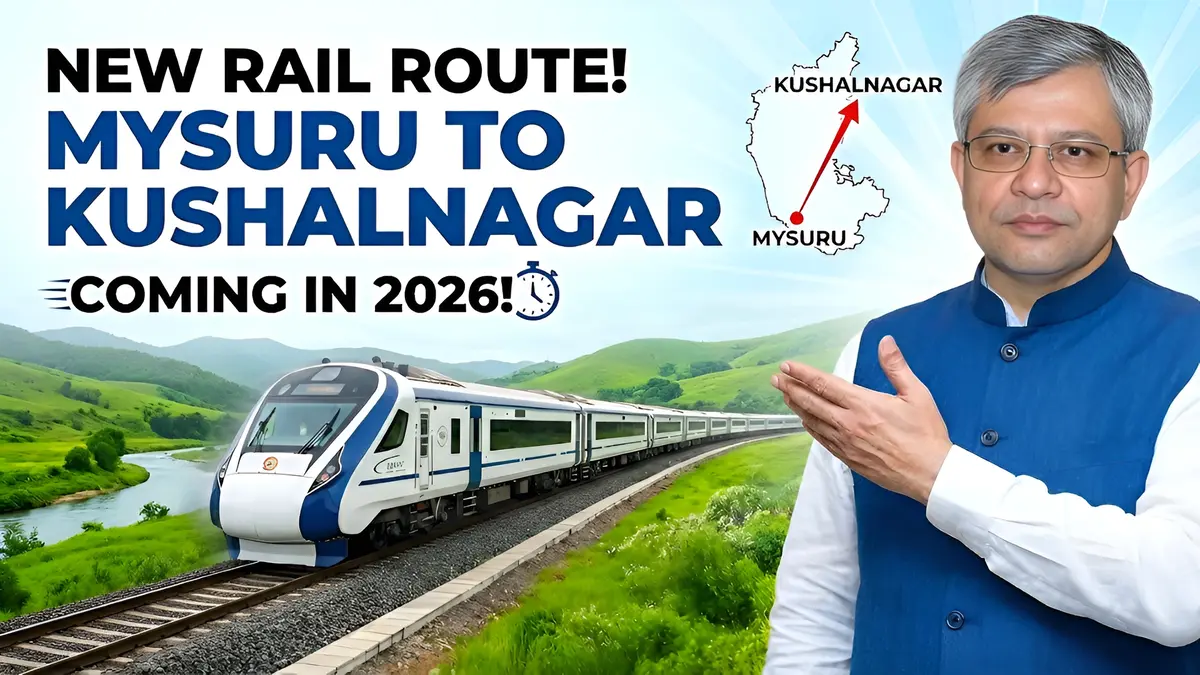
Mysuru–Kushalnagar Rail Line Update 2026: The proposed Mysuru–Kushalnagar rail line has once again moved into the spotlight as Karnataka’s infrastructure priorities evolve in 2026. This ambitious railway project is seen as a potential game changer for connectivity between southern Karnataka and the Kodagu region. With growing population pressure, rising tourism, and overloaded highways, the demand for a direct rail link has become more practical than political. Here is a clear, detailed, and updated look at what the project promises and where it currently stands.
A Connectivity Gap Finally Addressed
The absence of a direct railway line between Mysuru and Kushalnagar has long been a logistical challenge for residents and travelers. Road transport remains the only option, often leading to traffic congestion, delays, and higher travel costs. The proposed rail line aims to close this connectivity gap by offering a faster and more reliable alternative. For daily commuters, students, and traders, this link could significantly improve mobility and reduce dependence on crowded highways.
Route Length That Changes Travel
The Mysuru–Kushalnagar rail project is planned with a total route length of approximately 87.2 kilometers. This stretch is designed to pass through key towns and developing areas, ensuring wider regional coverage. By connecting interior pockets directly to Mysuru’s railway junction, the route could shorten travel time and improve access to long-distance trains. The alignment has been carefully studied to balance operational efficiency with regional accessibility.
Cost Figures Reflect Project Scale
The estimated cost of the rail line runs into several thousand crore rupees, highlighting the scale of investment involved. Major cost components include land acquisition, track construction, station development, signaling systems, and safety infrastructure. Challenging terrain and the need for bridges and culverts further add to expenses. Authorities have indicated that cost-sharing between the state and central governments will play a crucial role in execution.
Planning Stage Still In Focus
As of 2026, the project remains at the planning and evaluation stage rather than active construction. Detailed surveys and feasibility studies have already been conducted to assess technical, financial, and environmental viability. The Detailed Project Report has been prepared and reviewed at multiple levels. Final approval depends on funding commitments, environmental clearances, and alignment confirmation, making this phase critical for the project’s future.
Tourism Push Gains Momentum
Tourism remains one of the strongest drivers behind the Mysuru–Kushalnagar rail line. Kushalnagar is a major entry point to Coorg, attracting thousands of tourists throughout the year. A direct rail connection could make travel easier, especially for visitors coming from other states. Improved rail access may reduce road congestion during peak seasons and support sustainable tourism growth across the region.
Economic Impact Beyond Travel
The economic potential of the project extends well beyond passenger convenience. Improved rail connectivity can lower logistics costs for agricultural produce, local industries, and small businesses. New stations often act as growth hubs, encouraging commercial development and employment opportunities. Over time, the rail line could strengthen regional trade links and contribute to balanced economic growth in both urban and rural areas.
Environmental Balance Under Scrutiny
Environmental considerations are central to the Mysuru–Kushalnagar rail project. Portions of the proposed alignment lie close to ecologically sensitive zones, requiring strict compliance with environmental norms. Measures such as wildlife corridors, controlled construction practices, and minimal tree cutting have been discussed. Authorities are under pressure to ensure that development goals do not come at the cost of long-term ecological damage.
Local Response Shapes The Debate
Public opinion around the project has been active and diverse. Many residents support the rail line for its development potential, while others raise concerns about land acquisition and environmental risks. Public hearings and stakeholder consultations have influenced route planning and mitigation strategies. This ongoing dialogue reflects the importance of community involvement in shaping large infrastructure projects.
Future Depends On Clear Decisions
The future of the Mysuru–Kushalnagar rail line now depends on timely approvals and coordinated decision-making. Funding clarity, environmental clearance, and political will are the final hurdles. Once these are addressed, the project could move into the execution phase. Delays, however, may increase costs and push benefits further into the future, making swift action essential.
Final Word: Mysuru–Kushalnagar Rail Line Update 2026
The Mysuru–Kushalnagar rail line represents a strategic investment in Karnataka’s transport and economic future. With its 87.2 km route, the project has the potential to improve connectivity, boost tourism, and support regional development. While challenges remain, especially around cost and environmental impact, careful planning and transparent execution could turn this long-pending proposal into a transformative reality.