
EPFO Pension 2026 Update: The EPFO pension system plays a crucial role in the retirement planning of millions of salaried employees in India. Despite regular monthly deductions, many people remain unclear about how the Employees’ Pension Scheme works and what benefits it actually provides. With growing discussions around EPS rules in 2026, employees want clear answers about eligibility, pension calculation, and long-term value. This article explains the EPS structure in simple terms and highlights what pension you can expect after completing 15 years of service.
Understanding EPS In Simple Terms
The Employees’ Pension Scheme is a social security program managed by EPFO to provide monthly income after retirement. From the employer’s 12 percent EPF contribution, 8.33 percent is diverted into EPS. Unlike EPF, this money is not invested in markets or shown as a balance. EPS functions as a defined benefit scheme where pension depends on salary limits and service years rather than total contributions.
Why Service Years Matter Most
Years of service directly determine EPS eligibility and pension amount. A minimum of 10 years of service is required to receive a monthly pension. Completing 15 years significantly improves pension benefits and ensures long-term security. EPFO rounds service periods to the nearest year, which means even partial service periods can affect your final pension calculation. Staying consistent in employment helps maximize EPS benefits.
Salary Limit That Affects Pension
EPS pension is calculated using pensionable salary, not actual take-home pay. Pensionable salary is the average basic salary plus DA of the last 60 months of service. Currently, the salary considered for EPS is capped at ₹15,000 per month for most employees. Even high-income earners fall under this limit unless higher contribution options were officially selected and approved.
Pension Formula You Should Know
The EPS pension formula is straightforward but often misunderstood. Monthly pension is calculated as pensionable salary multiplied by years of service, divided by 70. This formula remains the foundation of EPS benefits in 2026. Since both salary and service are fixed variables, employees can estimate their pension well in advance and plan additional retirement savings accordingly.
Pension Amount After Fifteen Years
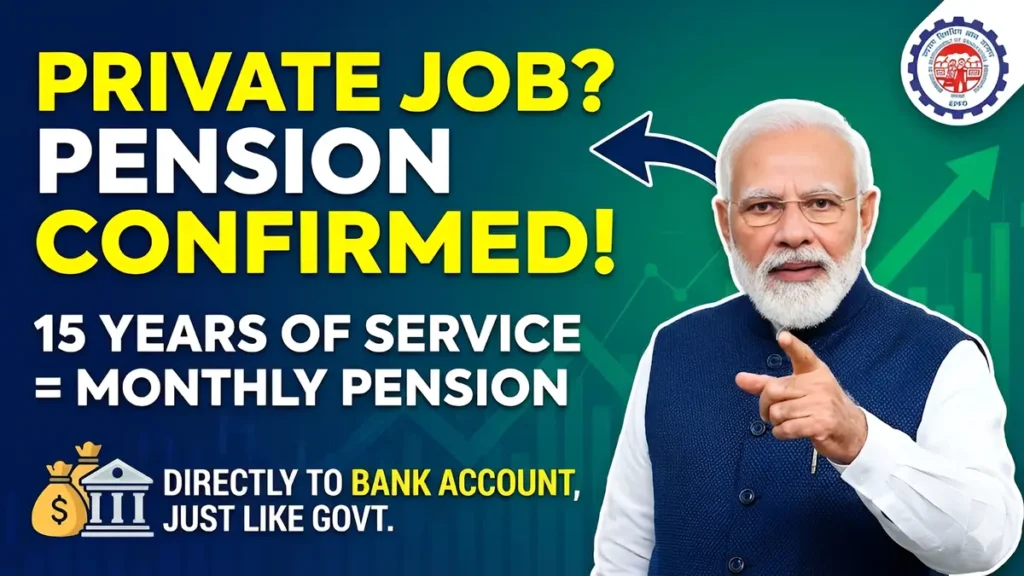
Employees completing 15 years of service become eligible for a noticeable EPS pension. With a pensionable salary of ₹15,000 and 15 years of service, the monthly pension works out to around ₹3,214. While this may not cover all retirement expenses, EPS is designed as a stable support income that complements EPF savings and other retirement investments.
Early Pension Comes With A Cost
EPS allows employees to opt for early pension after the age of 50, but this comes with a permanent reduction in monthly payout. For every year pension is drawn before the age of 58, the amount is reduced by a fixed percentage. Early pension can help during employment gaps, but it lowers lifetime benefits and should be chosen only after careful financial evaluation.
Family Security Through EPS
One of the strongest features of EPS is family protection. In case of the employee’s death, the spouse becomes eligible for widow pension, and children may receive benefits until a specified age. These family pensions ensure financial continuity and make EPS more than just a retirement scheme. This feature adds long-term value, especially for households dependent on a single income source.
What Happens Before Ten Years
Employees who leave service before completing 10 years are not eligible for monthly pension. Instead, EPS offers a lump sum withdrawal based on predefined salary slabs and service duration. Many employees unknowingly withdraw EPS during job changes, missing out on future pension eligibility. Preserving EPS service through proper transfers can significantly improve retirement outcomes.
Higher Pension Option Explained
Some employees have opted for higher EPS contributions based on actual salary instead of the wage ceiling. This can result in a higher pension but involves additional compliance, documentation, and contribution adjustments. Not everyone qualifies for this option, and it often applies to employees with uninterrupted service history. For most workers, standard EPS rules still apply in 2026.
Final Word: EPFO Pension 2026 Update
The EPFO pension scheme continues to be a dependable but limited retirement benefit in 2026. Completing 15 years of service ensures a stable monthly pension, but EPS alone is not sufficient for a comfortable retirement. Employees should view EPS as a safety net and combine it with EPF savings, NPS, and personal investments. Understanding EPS rules early helps avoid costly mistakes and builds a more secure financial future.